Platforms
How to sell on WeChat: a guide for brands
China's biggest brand ecosystem is WeChat. Official Accounts, Video Accounts, Mini Programs, ads, and WeCom, and how to sell across all five.
WeChat is not one app. It is five sales tools stacked inside one login. Here is how each one works, and how to make them work together.
Most brands still treat WeChat as a place to post, and that is where they lose. WeChat is where the buying actually happens in China, from the first tap to the repeat order six months later.
In the third quarter of 2024, transactions running through WeChat Mini Programs passed a level most national economies never see.
WeChat Mini Program transaction volume passed 2 trillion yuan in a single quarter (Q3 2024), up by double digits year over year. Source: 腾讯新闻 / Tencent News
That is not a niche channel. It is a shopping mall the size of a country, and the audience inside it is enormous.
WeChat Mini Programs reached 949 million users as of October 2024, opened close to 70 times a month on average. Source: QuestMobile / 贵士移动
This guide covers the five parts of WeChat that move product, with current 2024 figures throughout. Read them in order. Each one feeds the next.
The five moves, at a glance
| Tool | What it does | What it is best for |
|---|---|---|
| Official Account | Your content hub and follower base | Publishing, service, staying in front of people |
| Video Accounts | Short video inside WeChat | Reaching people who don’t follow you yet |
| Mini Programs | Your store inside the app | Selling, loyalty, checkout |
| Ads and KOLs | Paid reach and borrowed trust | Getting found fast |
| WeCom | One to one at scale | Keeping customers and driving repeat sales |
None of these works alone. A great store with no traffic just sits there empty, and all the reach in the world is wasted if there is no store to send it to. What makes WeChat work is the way these pieces feed each other.
1. Build a base with Official Accounts
Your Official Account is your home on WeChat. It holds your followers, your articles, and the menu that sends people to your store. Everything points back to it. There are two types, and the choice is made for you.
| Account type | Who it is for | What you get |
|---|---|---|
| Service Account | Foreign companies (this is you) | 4 pushes a month, WeChat Pay, menus, APIs |
| Subscription Account | Local publishers and creators | Daily posts, but no push alerts |
Nearly every international brand runs a Service Account. Four pushes a month is all you get, so each one has to earn its place. In late 2024 Tencent tucked Service Account posts into their own folder, which quietly cut how many people see them by default. That raised the bar, and thin content tends to sink out of sight now.
Write things people actually want. Chinese readers treat Official Account articles like a cross between a blog and a newsletter. How-to guides, honest product breakdowns, behind the scenes looks, these hold attention. A straight sales pitch does not. If your article doesn’t help the reader, they won’t finish it, let alone share it.
The menu bar on your profile is prime real estate, so use it. Point it at your store, your best article, and a simple FAQ. Then set a welcome reply with a first-order coupon, and add keyword replies so a follower who types “sizing” gets an instant answer. Handled well, it runs like a service desk that staffs itself.
Turn followers into members. Offer a digital membership card with points and perks. Capture city and preference data against the WeChat ID so you can send the right offer to the right person later. This is your owned audience, and it costs nothing to build.
2. Reach new people with Video Accounts
Short video is where discovery happens now, and WeChat has its own version built in: Video Accounts (视频号). What makes it different is that it sits on top of WeChat’s social graph. When someone likes a clip, their friends can see it. That is reach beyond your own followers, spreading through the relationships people already have.
The audience skews a particular way, and it matters for who should lean in.
On WeChat Video Accounts, women make up about 63% of viewers, and users aged 25 and over account for 97.7%. Source: 知乎 / Zhihu
So this is an older, calmer audience. They come for useful, grounded content: explainers, product demos, short interviews, quiet human stories. Scale is hard to pin down, because Tencent keeps the official number to itself.
Third-party industry estimates put WeChat Video Accounts near 600 million daily active users. Tencent does not release an official figure. Source: 中国短视频行业报告 / China Short Video Industry Report (third-party estimate)
Whatever the exact figure, the base keeps expanding, and fast.
The number of Video Accounts with over one million followers roughly doubled across 2024. Source: 新榜 / Newrank
A few things that work. Hook people in the first two seconds, because drop-off is instant. Add Chinese captions, since plenty of people watch on mute. Post two or three times a week so the algorithm keeps testing you. And link every video back to your Official Account or store, so a view becomes a follow, and a follow becomes a sale.
3. Sell with Mini Programs
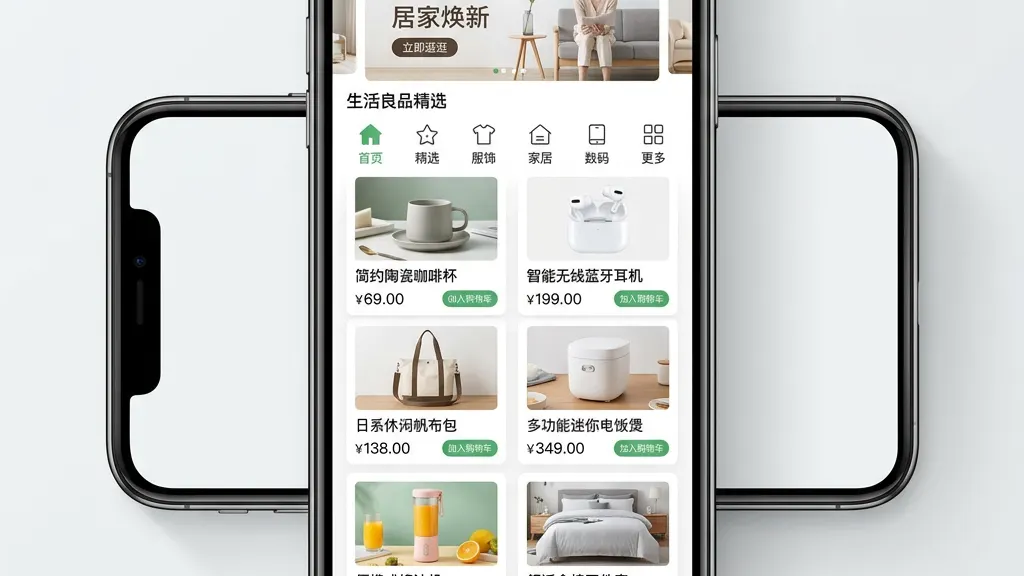
Think of the Mini Program as your cash register. It is a full store that lives inside WeChat. There is no download and no app store, and you never push people out to an outside website where half of them vanish on the way. They browse, add to cart, and pay with WeChat Pay, all without leaving the app.
We saw the scale of what moves through them. The user base is just as big.
Life-service, mobile-shopping, and finance Mini Programs each drew more than 860 million monthly active users in 2024. Source: 数英 / Digitaling
Most brands underestimate what comes next. Mini Programs are not just for selling once. They are the best retention tool on the platform. Sync your membership here, add points and tiers, give people a reason to come back. The luxury houses figured this out early, and the growth they pulled from it was steep.
In 2024, monthly active users on the Hermès and Cartier WeChat Mini Programs grew 704% and 2,551% year over year. Source: 数英 / Digitaling
Keep it fast and simple. A slow store loses people before they buy, and in our work the drop-off shows up fastest right here, at load time. Strip the checkout down. Add group-buying or friend-referral discounts, which travel naturally through WeChat’s social side. Put entry points everywhere: a “Shop” button in your menu, a card inside each article, a QR code on packaging and at the register. Scanning a code to open a store is second nature here.
For B2B, the same tool does a different job. Build a product catalog, a quote calculator, or a booking form that drops a lead straight to your sales team. The friction stays low, which is the whole point.
4. Buy reach with ads and creators
That covers the parts you build and own. The last two are about speed and staying power. Organic growth works, but it takes time. Paid reach and the right creators buy you speed, which matters most at launch, when nobody knows your name yet.
WeChat’s ad system runs across Moments, Official Accounts, Video Accounts, Mini Programs, and Search, and each placement does a different job at a different price. Budgets start small on bidding buys and climb fast for premium placements. A Moments scheduled buy, for instance, starts at 50,000 yuan, about 7,000 dollars, for a single campaign.
A WeChat Moments scheduled ad buy starts at roughly 50,000 yuan (around 7,000 dollars) per campaign. Source: 九枝兰 / Jiuzhilan
We covered the full breakdown, format by format, with the actual numbers, in our guide to WeChat advertising formats and costs. Start there before you spend.
On the creator side, WeChat runs on trust more than flash. Key Opinion Leaders (KOLs), the big names, carry reach. A respected Official Account writing an honest piece about your product pulls weight, because the reader chose to be there. Smaller voices matter too. Key Opinion Consumers (KOCs), everyday customers with real followings, spread recommendations inside groups and Moments where a hard ad would never land. One rule holds across all of it: check real engagement before you pay, because follower counts get inflated and a big number can hide a dead audience.
5. Keep customers with WeCom and private domain
Winning a customer is the expensive part. The margin is in keeping them. And in China’s open web, that first sale keeps getting more expensive.
The cost of acquiring a new customer through public channels has climbed from tens of yuan to several hundred yuan since 2018. Source: 甲子光年 / Jiazi Guangnian
That is the whole case for private domain, your own owned audience of followers and members you can reach again and again at almost no cost. The tool for it is WeCom (企业微信), Tencent’s business version of WeChat. A customer adds your advisor like they would a friend, and now you have a direct line.
The playbook is not complicated. Bring new followers over with an incentive, tag them by interest and what they have bought, then use that line for order updates, after-sales help, and the occasional well-timed offer that is not spam. Do it right and a one-time buyer becomes a regular. Most of China’s biggest companies already run this way.
More than 80% of Fortune 500 companies operating in China have adopted WeCom. Source: 群应用 / WeScrm
Set it up once and it becomes the cheapest sales channel you own, working quietly in the background long after the ad budget is spent. We go deep on how private domain traffic works, and how to build it, in our full explainer on WeCom. If retention is your priority, read that next.
Where brands go wrong
The most common mistake is running WeChat like a posting calendar rather than a sales system. The brands that pull ahead connect the pieces. Reach on Video Accounts feeds followers on the Official Account. The Official Account feeds the Mini Program store. The store feeds WeCom, and WeCom brings people back to buy again.
The second mistake is skipping real localization, which is not the same thing as translation. It means tone, timing, the festival calendar, the visual language people expect. Content built for another market and dropped into WeChat reads as foreign, and it underperforms.
Common questions
A few things brands ask us before they start.
Do I need a Chinese company to run WeChat? For a verified Service Account and WeChat Pay, you need a Chinese business entity or an authorized local representative. Sort this out first. Nothing else runs without it.
Can a smaller brand win without a big ad budget? Yes. Plenty do it on private domain and community instead of heavy spend. Consistent Official Account content, QR-driven sign-ups, and a tight WeCom setup grow steadily on a modest budget.
How do people discover new brands on WeChat? Mostly through friends, creator mentions, and QR codes in the real world, on packaging, at events, in stores. WeChat Search matters too when your content carries the right Chinese keywords.
How fast do customers expect a reply? Fast. WeChat is a chat app first, so people expect a conversation, not a support ticket. Answer within a day, and use auto-replies for the common questions.
Which part should I build first? The Official Account and a Mini Program store, a place to publish and a place to sell. Add Video Accounts for reach and WeCom for retention once the base runs.
Want to grow your brand on China's social platforms?
Book a call