Platforms
China's Social Media Platforms: A Guide for Brands in 2026
WeChat, Douyin, RedNote, Weibo, and a dozen more Chinese platforms. A clear, current guide to being present, finding influence, and publishing in China in 2026.
Your Facebook playbook does not work here. Neither does the Instagram one, or the TikTok one.
China runs on its own apps. Facebook, Instagram, X, Google, and YouTube are all blocked. So is the marketing stack built around them: your global ad accounts, your tracking pixels, your usual analytics. In their place sits a deep, crowded field of homegrown platforms. Each has its own audience, its own content rules, and its own path from a scroll to a sale.
Here is how it all stands as of mid-2026.
And it is big. By December 2025, China had 1.276 billion people on mobile internet each month. The average person spent almost 8 hours a day on their phone.
截止2025年12月,移动互联网月活用户规模已达到12.76亿。
As of December 2025, monthly active mobile internet users reached 1.276 billion. Source: 贵士移动 / QuestMobile, December 2025.
For a foreign brand, the first problem is not whether to be in China. It is where to start, and what each platform actually does once you are there.
This guide walks through the platforms that matter. The big four first, in depth, then the next tier, then the niche players you should at least recognize. Hard numbers, the features that matter, and a plain read on who each one is actually for. If you only want the short answer on where to begin, skip to the last section.
The market in brief
China’s internet ad market keeps growing, but the easy growth is over. Brands now chase precision, not just reach. Short video, e-commerce, and social are where the money goes.
AI sits inside all of it. China’s AIGC market reached about 25.7 billion RMB in 2025, roughly 3.5 billion US dollars, and is growing past 50% a year. Over half of Chinese advertisers now use AI somewhere in their creative work.
2025年中国AIGC核心产业规模约257亿元,预计2027年迎来增速拐点。
China’s core AIGC industry reached about 25.7 billion RMB in 2025, with a growth inflection point expected in 2027. Source: 量子位智库 / QbitAI Think Tank, 2025.
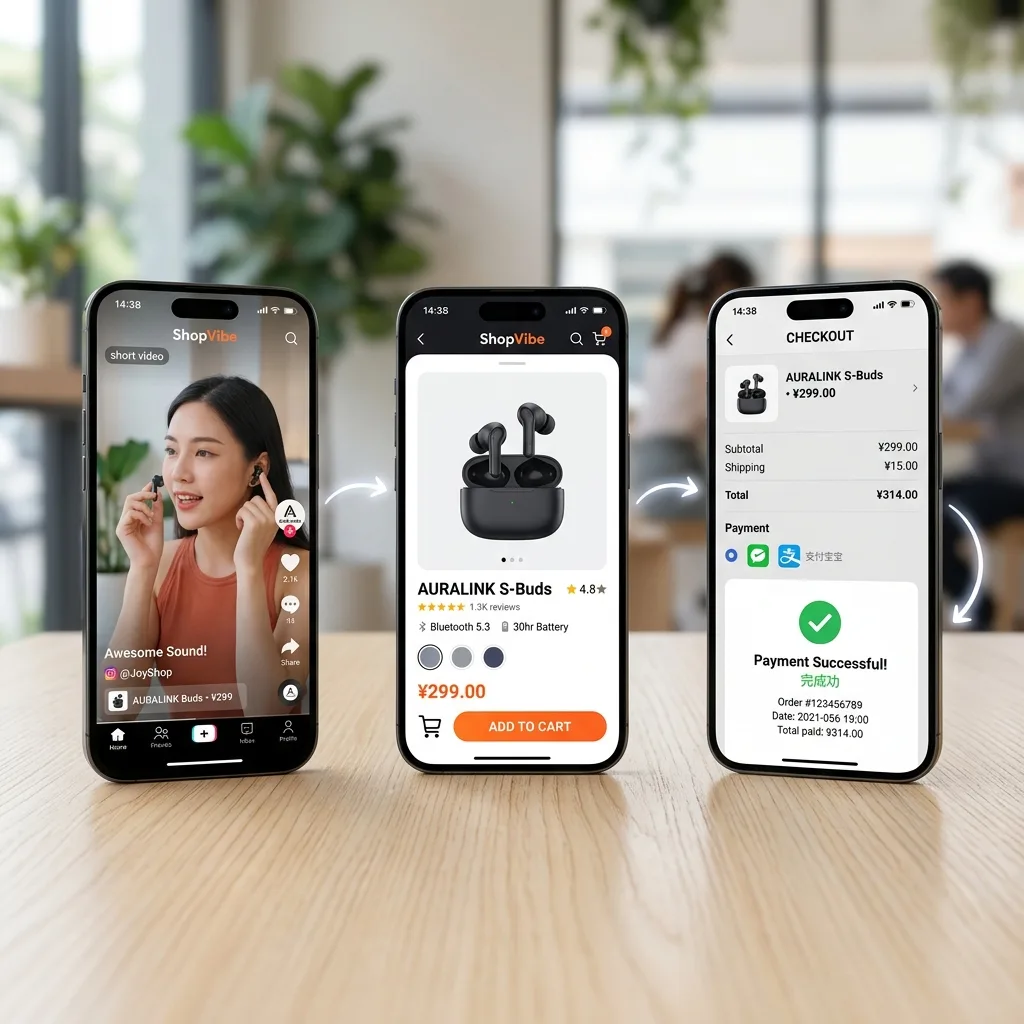
One pattern shapes everything: the platforms are closing their loops. Discovery, content, checkout, all inside one app. If a customer has to leave to buy, you have probably already lost the sale.
So China social media is not a side channel you bolt on later. For most brands it is the main way the Chinese consumer will ever meet you.
We run these platforms for brands every day, so what follows is a working view, not a textbook one.
WeChat (微信): the operating system of daily life
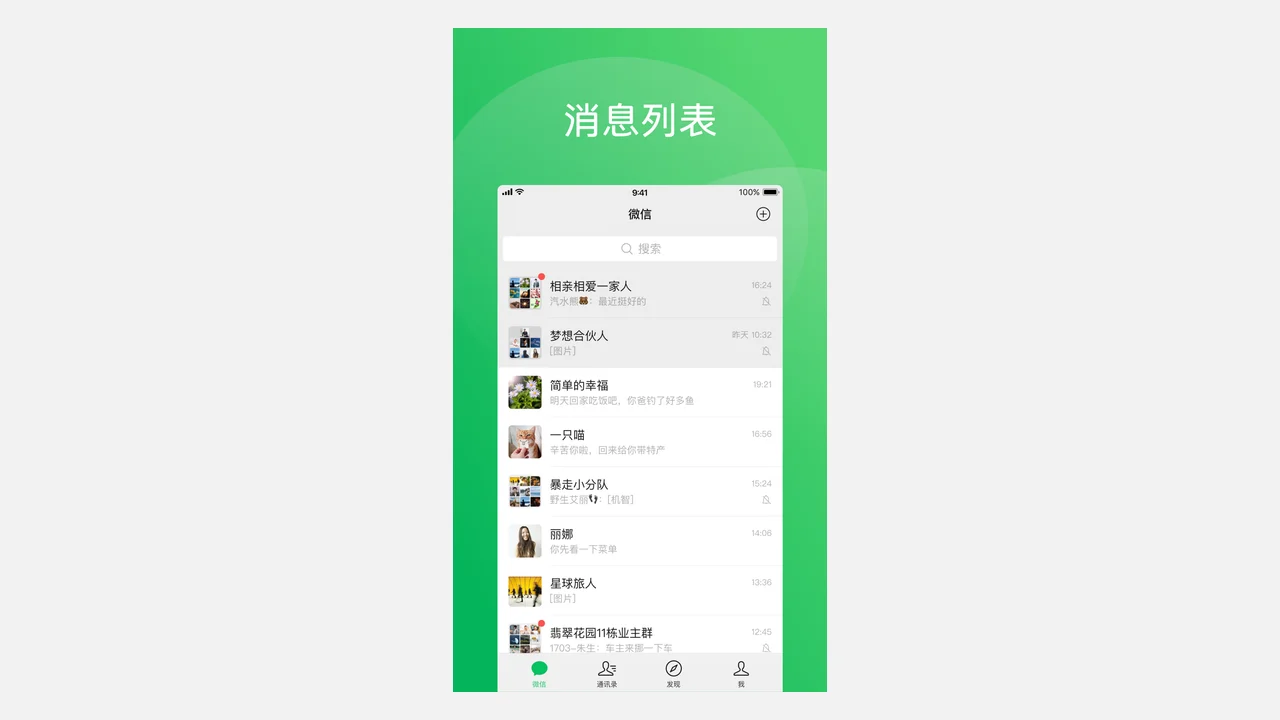
Calling WeChat a social network undersells it. It is the layer everything else in Chinese digital life runs on.
Tencent reported 1.432 billion monthly active accounts for Weixin and WeChat in early 2026. People message, pay, hail taxis, order dinner, split a bill, shop. For most Chinese consumers, a day without WeChat is hard to picture.
For brands, WeChat is less about reach and more about depth. It is where trust gets built and customers get kept.
The pieces that matter:
Official Accounts. Your verified home in China. Service Accounts allow a few pushes a month and sit in the chat list, good for transactions and customer care. Subscription Accounts post daily in a separate feed, better for steady content and brand storytelling.
Mini Programs. Lightweight apps inside WeChat. Customers shop, book, and join loyalty programs without ever leaving. You keep the user data for remarketing. Many brands now run a Mini Program as their main China storefront instead of a standalone site.
Video Channels (视频号). WeChat’s short-video feed has grown into a giant in its own right, with more than 800 million monthly users and around 1.5 billion daily searches. It pulls 92.9% of its traffic from inside the WeChat ecosystem, so a video can warm a viewer up before handing them to your Official Account or shop. Its commerce is climbing fast, with 2025 GMV estimated near 600 billion RMB.
Then there is WeCom and the private domain, 私域, which is where a lot of the smart money is going right now. As it gets more expensive to buy attention on the open platforms, brands are pulling customers into private chat groups and one-to-one conversations they actually own. Less exposure to the algorithm. Higher lifetime value.
If you sell to other businesses, WeChat is still your strongest channel. Chinese B2B buyers expect to find you there, and a serious Official Account does more for credibility than a polished website ever will.
微信视频号月活用户8亿+,日均搜索请求15亿次。
WeChat Video Channels has 800 million-plus monthly active users and 1.5 billion daily searches. Source: 知瓜数据 / Zhiguazhi Data, March 2026.
Douyin (抖音): short video and instant sales
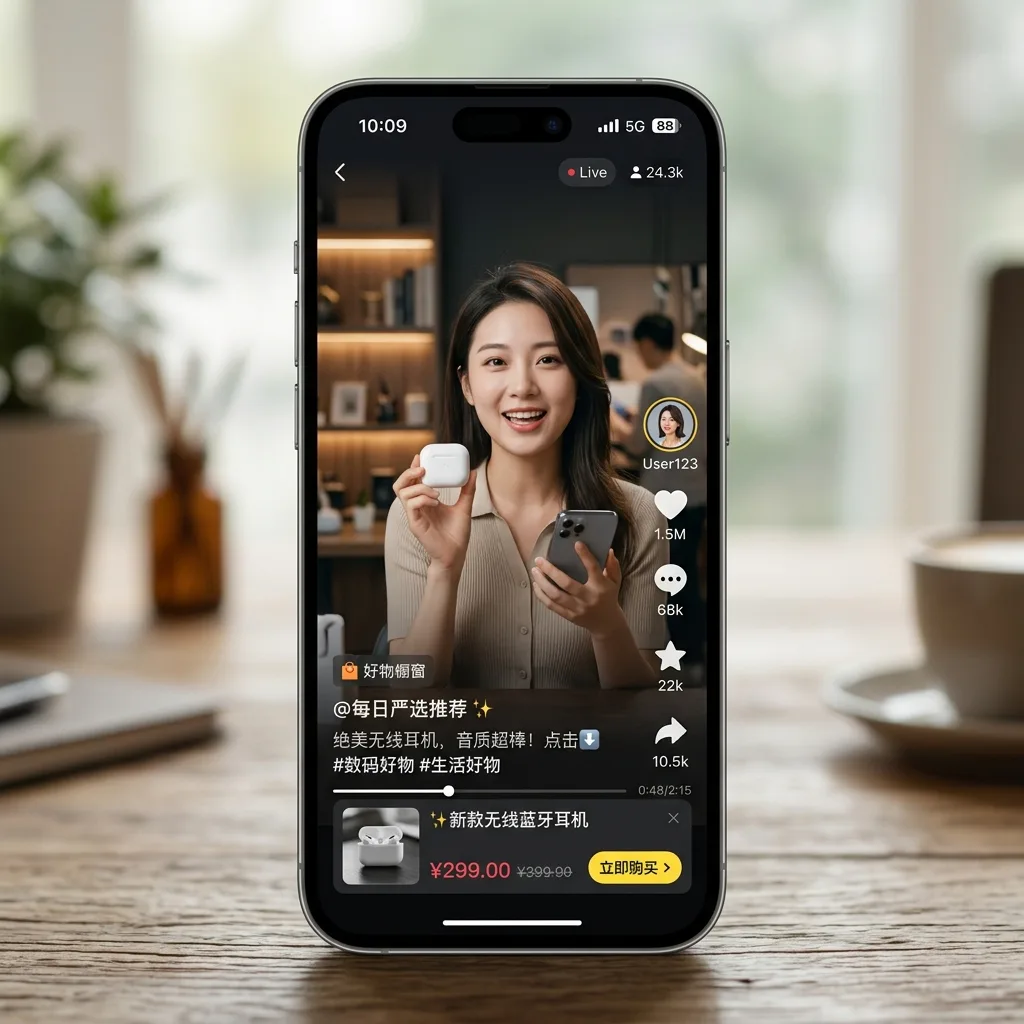
Most people know Douyin as the app TikTok was built from. Inside China it is something bigger: one of the most powerful sales engines in the world.
Industry roundups put Douyin at roughly 750 to 766 million monthly active users, with around 587 million daily. People open it to be entertained and leave having bought something. The recommendation engine pushes content by interest, so a small brand with the right clip can reach a huge audience fast.
What sets Douyin apart from Western short video is the checkout. Product links sit inside the video. Live shopping runs all day. A viewer goes from watching to buying in seconds, never leaving the feed.
The commerce is enormous. Douyin’s e-commerce GMV was on track to pass 4 trillion RMB in 2025, around 550 billion US dollars, growing more than 30% year on year. That is far ahead of the wider e-commerce market. In a sign of the platform’s pull, Apple opened a flagship store on Douyin in 2025, its first on a Chinese platform outside Tmall.
A few things worth knowing for 2026:
Content drives the sale, not the discount. The best-performing live rooms now win on story and on-camera personality, not price cuts. Some brands saw GMV jump by triple digits by building a strong “scene” and host persona, with most of the lift coming from organic traffic rather than paid.
Search is rising. Douyin’s “search after watching” now drives about a quarter of its e-commerce search demand, with daily page views over 100 million. Treat it like a search engine, not just a feed.
Douyin works best for B2C brands in beauty, fashion, food, travel, and consumer tech. If your product looks good in motion and people buy it on impulse, Douyin is probably where you should start.
抖音电商今年前十个月的GMV增速超30%,全年GMV将迈过4万亿元关口。
Douyin e-commerce GMV grew more than 30% in the first ten months of the year, set to pass the 4 trillion RMB mark for the full year. Source: 晚点 / LatePost, November 2025.
苹果在抖音开设Apple Store旗舰店。
Apple opened an Apple Store flagship on Douyin. Source: OFweek通信网 / OFweek Communications, November 2025.
RedNote / Xiaohongshu (小红书): where buying decisions get made
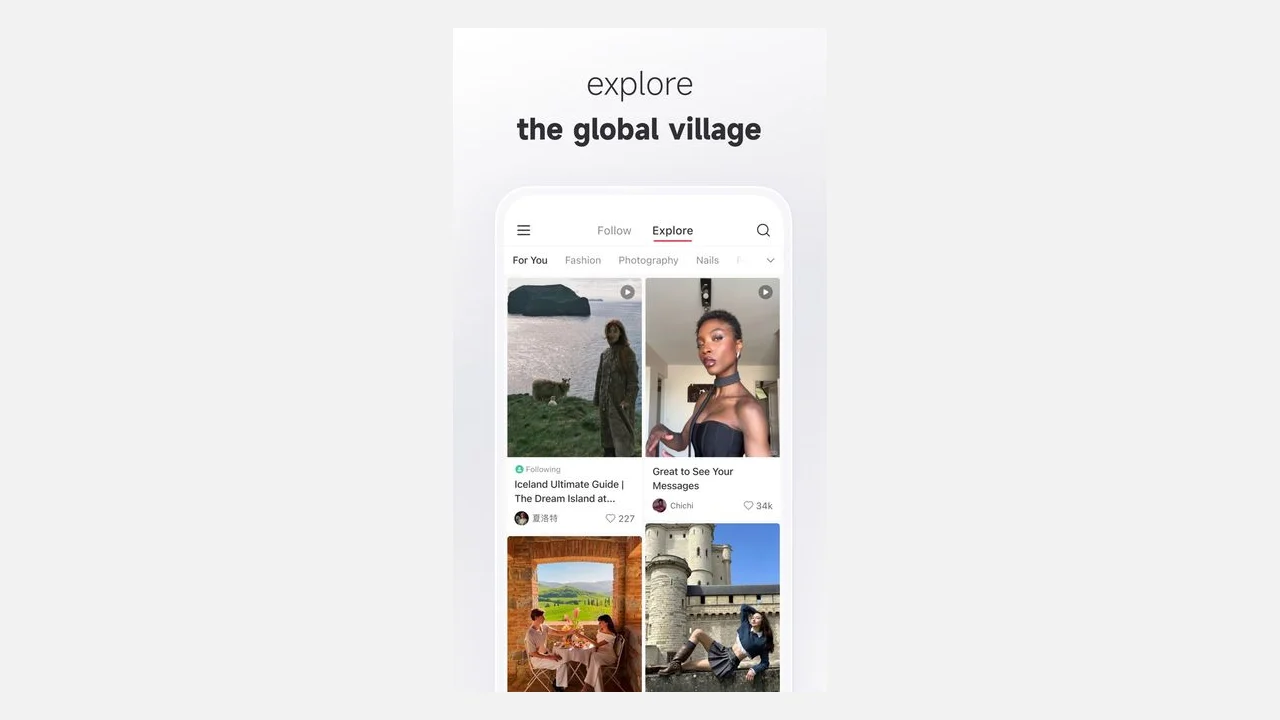
Before a lot of Chinese shoppers buy anything, they check RedNote first. Also called Xiaohongshu, RED, or Little Red Book, it has become the country’s trust engine.
By the end of 2025, monthly active users passed 350 million, with daily time on app over 74 minutes. The audience skews young and urban, mostly women, though more men show up every year. About 54% of users are under 30. Users post honest notes, reviews, and tutorials across beauty, fashion, travel, home, and food.
The peer-to-peer culture is what makes it work. A note from a real user carries more weight than any ad ever could. In early 2025, when a US TikTok ban loomed, hundreds of thousands of “TikTok refugees” flooded into RedNote in a single weekend, briefly pushing it to the top of the US App Store.
How brands win here:
Seed with everyday creators. The platform built its commerce on “buyers,” niche creators with small, loyal followings. Vertical buyers in autos, home, and parenting now convert as well as big-name KOLs.
Optimize for search. Many users arrive knowing what they want. Keep note titles short, ideally under 20 characters. Use real-scene cover images. Work in three to five long-tail keywords and up to ten targeted hashtags. That is what gets you surfaced when someone searches.
Watch the commerce build out. RedNote spent 2025 investing hard in its own shop. Its Singles’ Day livestream GMV passed 60 billion RMB, with average order value climbing to 580 RMB in categories like beauty and home.
截至2025年底,小红书月活用户已经超过3.5亿,日均使用时长超过74分钟。
By the end of 2025, RedNote had more than 350 million monthly active users and over 74 minutes of daily use per person. Source: 新浪财经 / Sina Finance, December 2025.
For a lot of foreign consumer brands, RedNote is the first door into China. Worth flagging for 2026: it is not just lifestyle anymore. More B2B brands are posting here too.
Weibo (微博): the public square
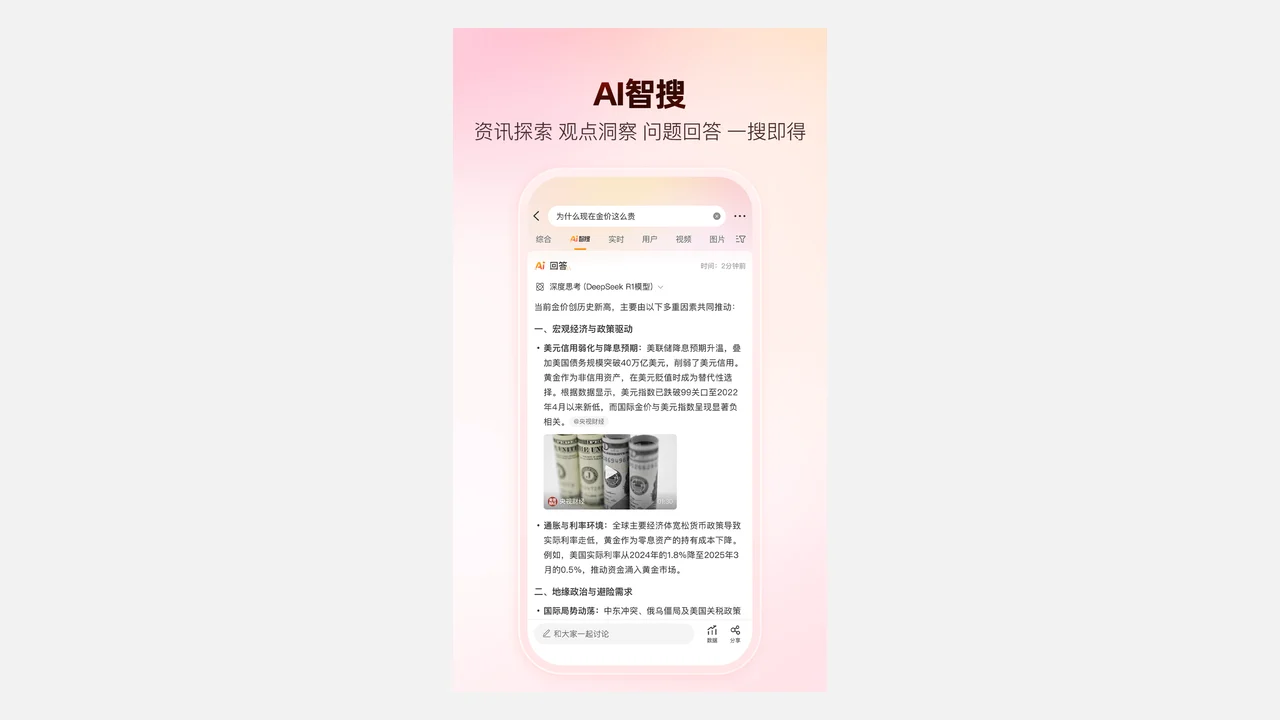
If WeChat is private and RedNote is personal, Weibo is public. It works like a mix of X and Instagram, an open stage built for conversation.
It still draws more than 580 million monthly active users, with close to 60% under 30. People go there for breaking news, trending topics, celebrity talk, and hot takes. Content is public and shareable, which makes Weibo the place to amplify a moment.
Weibo has been shifting from a pure “what’s hot” platform toward something more like daily life, with dozens of vertical interest circles spanning entertainment, sports, ACG, and lifestyle. Holiday and seasonal moments give brands recurring spikes to ride.
Use Weibo to get talked about: hashtag campaigns, PR pushes, and fast response when something breaks. Verification, the blue V badge, unlocks long-form posts, giveaways, and detailed analytics. Weibo is not where you nurture a relationship quietly. It is where you get noticed, fast and at scale.
That is the core four. For most brands they carry the bulk of the work. But depending on who you sell to, a few more are worth knowing.
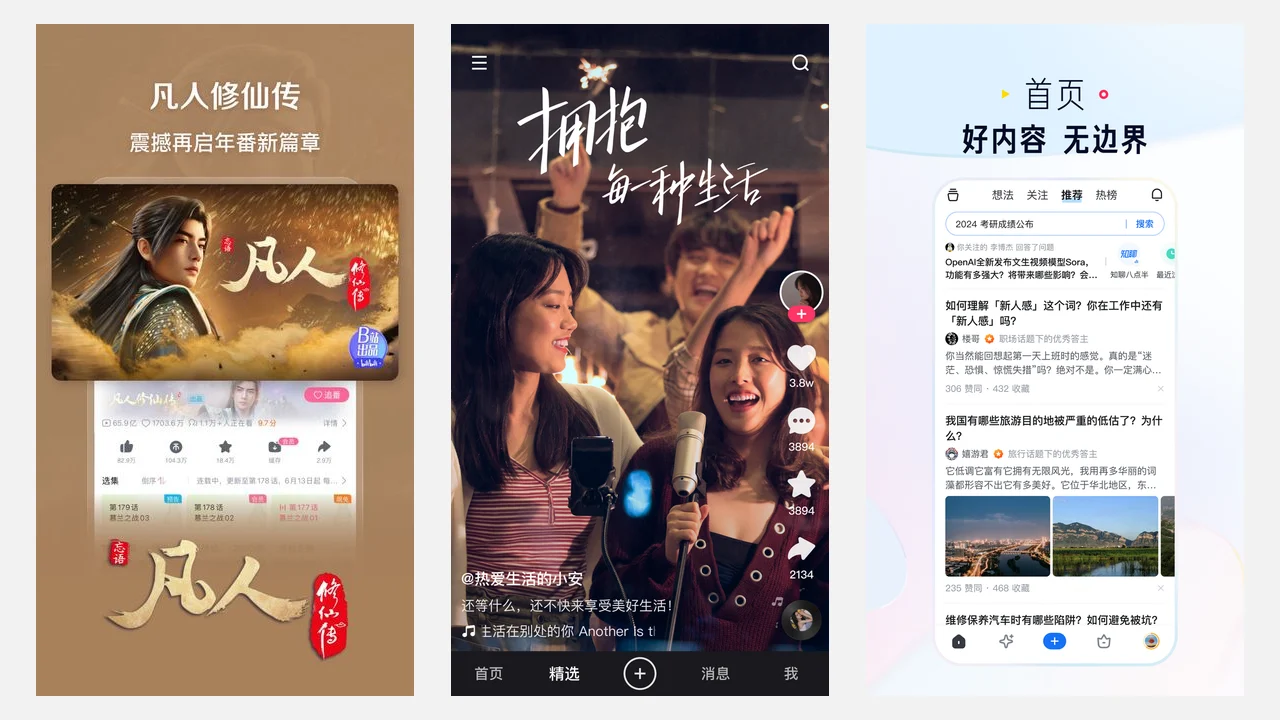
Bilibili (哔哩哔哩): Gen Z, depth, and trust
Bilibili is where young, educated China spends its time. About two-thirds of its users are under 30. On some peak days nearly 90% are under 35.
It started out built around anime and gaming culture, and it still owns that world. But it has grown into tech, science, education, lifestyle, and more. Its signature is the danmu, bullet comments that scroll across the screen and create a shared viewing experience few platforms can match.
Bilibili’s strength is depth. Creators make long, careful videos, and viewers trust them. That makes it strong for brands that can teach something or tell a story worth sitting through. Even B2B technical firms use deep-dive videos to reach young engineers and decision-makers. Nobody goes viral and sells out overnight on Bilibili. What you build there is credibility, and that takes longer.
Kuaishou (快手): grassroots reach and trust commerce
Kuaishou competes with Douyin in short video, but the feel is different. The content is rawer, more personal, rooted in everyday life. Its strength is China’s lower-tier cities and rural areas, where it runs deep.
More than a fifth of its users are over 50. Well over half live in third-tier cities and smaller towns. For value-driven products, and for audiences the big-city platforms barely touch, that reach is worth a lot.
Kuaishou runs on what it calls “trust commerce.” Creators and viewers build genuine bonds, and live shopping converts strongly on local goods, handmade items, and practical products. Its e-commerce GMV reached 1.39 trillion RMB in 2024 and kept climbing through 2025. Short dramas have also exploded here, pulling huge daily audiences.
Zhihu (知乎): expertise and credibility
For detailed, trusted answers, Chinese users go to Zhihu, the country’s Quora. The crowd is professionals and academics, plus serious hobbyists who know their subject cold.
It has around 80 to 100 million monthly active users, with a highly educated base. Brands do not win here by running ads. They win by answering questions well. A strong answer becomes an evergreen asset that ranks and builds authority for years. Zhihu is strongest for technology, finance, education, and autos, any category where buyers do their homework before they commit.
Toutiao (今日头条): content and reach
Toutiao is an algorithm-driven news feed, also owned by ByteDance. It has roughly 300 million users, and they skew a little older and more professional than Douyin’s. It is a content-marketing channel more than a social one. It pairs well with WeChat for B2B work, carrying articles, expert pieces, and targeted ads to people who actually read before they decide.
The platforms behind the platforms
You will not build a strategy on these, but they fill in real gaps. A quick look at each:
QQ (腾讯QQ) still has hundreds of millions of users, heavily Gen Z and teen. Good for gaming, youth culture, and entertainment brands.
Baidu Tieba (百度贴吧) is China’s Reddit, built into Baidu search. Interest forums where niche communities run deep, and content surfaces in search results.
Douban (豆瓣) is the home of culturally curious China: film, books, music. A small but influential, well-educated audience that trusts community ratings over ads.
Kuaishou, Taobao Live, and Douyin dominate live commerce, which keeps growing as a share of retail.
You do not need all of these. Most brands start with two or three platforms and add more once the first ones work.
The rules foreign brands keep tripping over

Three things trip up almost every newcomer.
You need to verify. Foreign brands can run official accounts and ads, but not on day one. The platforms ask for legal documents and business verification first, and some setups need an ICP filing on top. Plan for it. It takes longer than you would expect.
You cannot just translate. Copying a global campaign and swapping the language rarely lands. Content has to be built for the platform and the culture from the start: local slang, local festivals, local humor. A directly translated Western campaign reads as foreign, and Chinese audiences notice.
And the rules keep moving. New live-commerce supervision measures took effect on February 1, 2026, tightening oversight of livestream shopping and the agencies running it. Platforms now expect AI-generated content to be labeled. Data rules under PIPL are strict, and personal data generally has to stay on approved Chinese servers. None of this is a reason to stay out. It is a reason to have someone local who tracks it for you.
《网络直播电商监督管理办法》于2026年2月1日起施行。
The Live-Streaming E-commerce Supervision and Administration Measures took effect on February 1, 2026. Source: 央视新闻 / CCTV News, February 2026.
Where AI fits, and where it does not

AI now sits inside China marketing, not beside it. Douyin alone intercepted over 840,000 AI-faked ad assets in a single quarter of 2025, a sign of how much AI content is being produced. More than half of Chinese advertisers use AI in their creative work.
But speed is the part AI handles. Judgment stays human. Which platforms to pick, which creators to trust, what story to tell, when a campaign is working and when to change course. A machine can churn out a hundred posts. It still cannot tell you which one your audience will believe.
At TheRedScroll, that is the line we hold. AI produces. People decide. Every published piece gets a human review.
Where to start

If you are entering China, you do not need to be everywhere at once. You need the right two or three platforms, set up correctly, with content built for each one.
A simple starting mix for most consumer brands: a verified WeChat Official Account for your base, RedNote for discovery and trust, and Douyin for reach and sales. B2B brands often lead with WeChat and Toutiao instead, with Zhihu and Bilibili for credibility.
Budget follows ambition. A single-platform test costs far less than a full multi-platform program with KOLs and paid media behind it. What drives the number is simple: how many platforms you run, how much content you publish, and how much you put into ads and creators on top.
TheRedScroll grows social networks in China for three kinds of clients: brands entering the market, brands already operating here, and Chinese brands building their own presence. Same platforms, different starting points.
The work happens from Shanghai and Hong Kong. Every day. Not from a distance.
Verification delays, rules that shift under you, a platform bet that turns out wrong. These are the things that stall a China launch. We deal with them so you do not lose months learning the hard way.
Book a call and we will map the right platform mix for your brand.
Want to grow your brand on China's social platforms?
Book a call