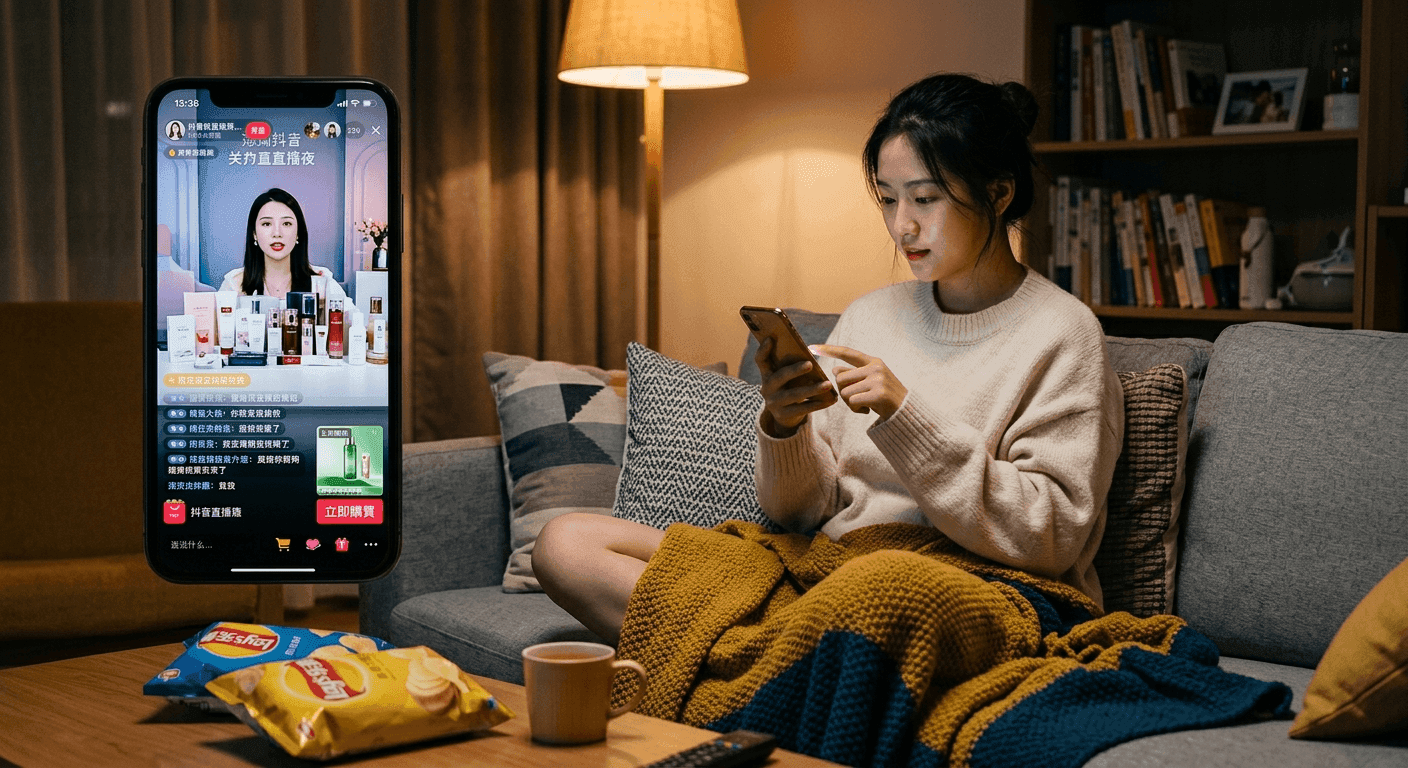
Nearly 600 million Chinese consumers now buy through livestreams. The market hit 5.8 trillion yuan in 2024. To understand why, you have to see it from the shopper’s side.
The scale of it
Livestream shopping in China is mainstream. It is how a huge chunk of the population buys things now.
How big is it? iResearch puts the market at 5.8 trillion yuan in 2024. User penetration went from 4.9% in 2019 to 37.8% in 2024, bringing the total to close to 600 million regular livestream shoppers. In 2023 alone, Chinese platforms hosted over 110 million livestream sessions featuring more than 70 million products, with over 2.7 million active hosts.
Source: CIECC, Livestream E-commerce High-Quality Development Report 2024
And this is not passive viewing. According to iiMedia Research, 79.32% of short video and livestream users have made a purchase through the platform. Over 55% of regular viewers buy at least once a month. Only 15.5% of viewers say they watch purely for entertainment with no purchase intent.
Source: iiMedia Research; China Consumers Association
That is not a trend. It is a fundamental shift in how Chinese consumers shop.
Why shoppers prefer it: five reasons
The easy explanation is “it is entertaining.” And sure, that is part of it. But if entertainment were the whole story, people would watch and not buy. The real reasons go deeper than that.
1. They can see the product for real
Anyone who has ever bought something online based on a photo knows the feeling when it arrives and looks nothing like the listing. Livestreaming cuts through that. The host holds the product, demonstrates it, tries it on, tests it live. According to iiMedia Research survey data, 59.89% of livestream shoppers say the main reason they prefer livestreaming over traditional e-commerce is that product presentation is more direct and authentic.
The China Consumers Association found that the top three reasons consumers prefer livestream shopping, accounting for 83.9% of responses combined, are: the ability to create an immersive buying atmosphere, stronger interactivity, and the fact that products appear more real and tangible.
2. They get answers instantly
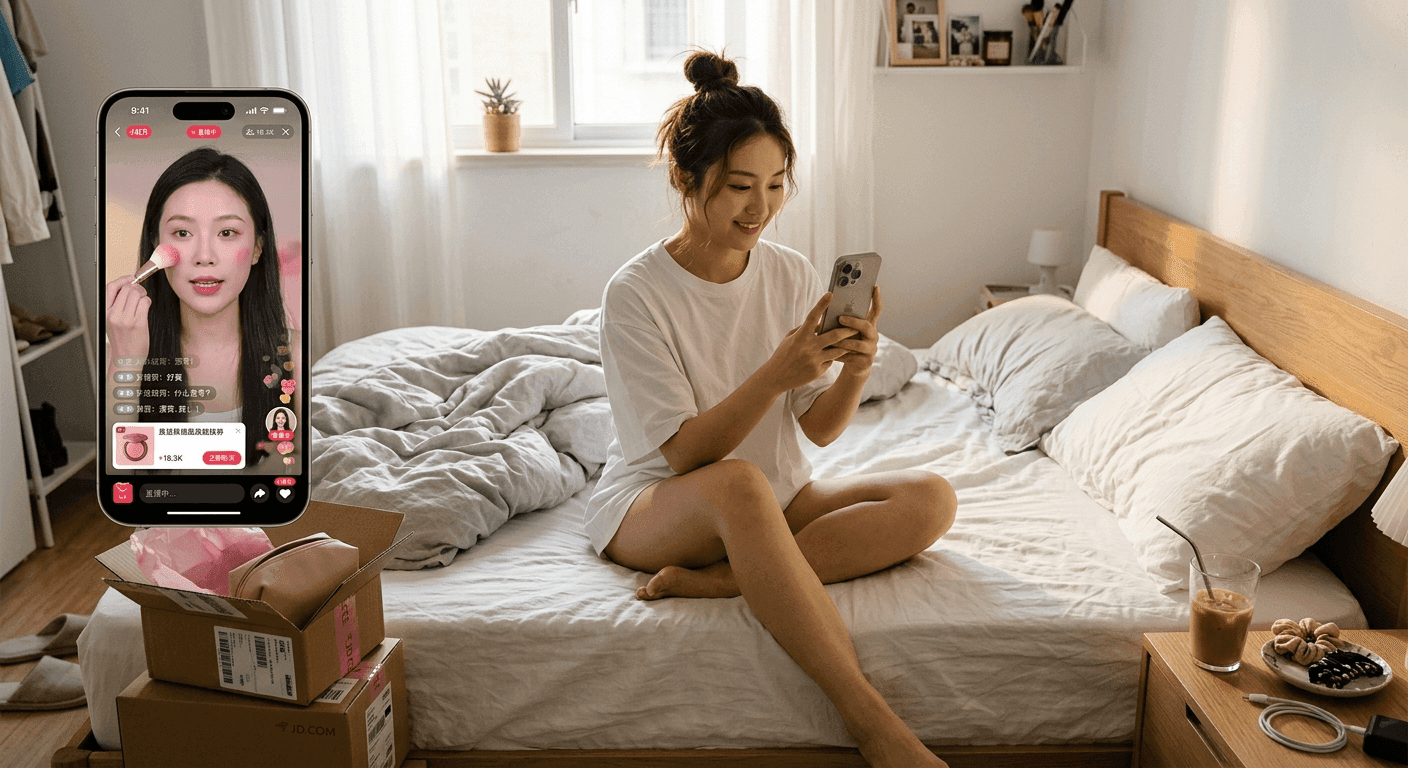
In a livestream, shoppers type questions into the chat and the host responds in real time. Does this run small? What is the fabric like? Is this safe for sensitive skin? This kind of real-time back-and-forth simulates talking to a salesperson in a physical store. Except you are doing it from your couch at 10 PM. That combination of convenience and human contact is extremely hard to replicate with product pages and chatbots.
Source: Commercial Economy Research; Cankao Wang, 2025
3. The prices are genuinely lower
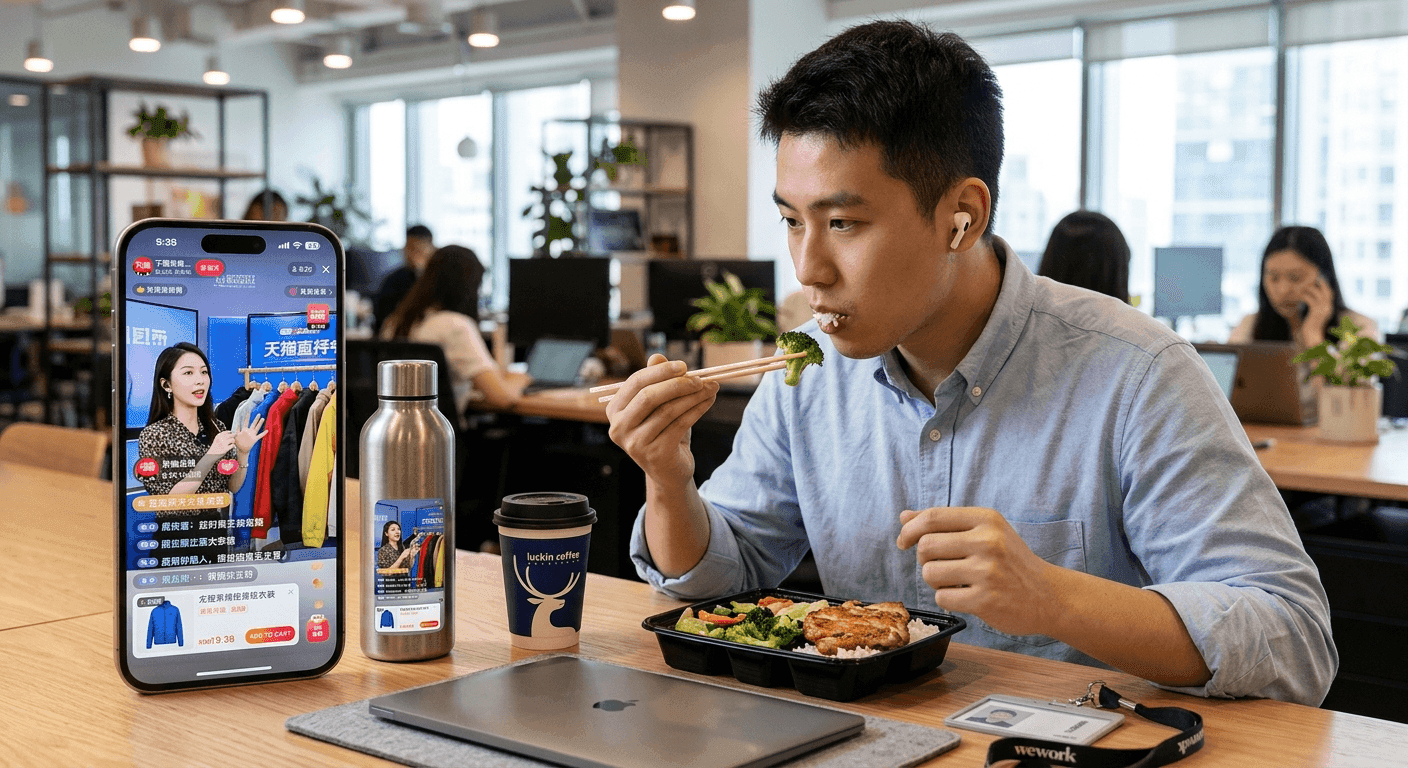
This is not just perception. Brands offer livestream-exclusive discounts, bundle deals, and limited-time coupons that are not available on the regular product page. During the 2024 618 festival, livestream e-commerce sales reached 206.8 billion yuan, up 12.1% year-over-year. A large portion of that growth came from price-conscious shoppers waiting for livestream-only deals.
Source: iiMedia Research
4. They trust the host
The best livestream hosts in China are not salespeople. They are educators and trusted advisors. Oriental Selection built its brand around former teachers who explain products with humor, depth, and genuine expertise. Viewers come back to the same host not just for deals but because the relationship feels personal.
According to the China Consumers Association survey, nearly 70% of livestream shoppers say they will buy a product if the host recommends it and they like it. Another 22.7% say they will buy in most cases when the host recommends something. Try getting those numbers from a product detail page.
5. Social proof is happening live
When hundreds of people buy the same product in real time and the chat fills with “just ordered” and “already received mine from last time,” it changes how you feel about pressing the buy button yourself. Research from Tsinghua University found that the “purchase atmosphere” in a livestream room, created by visible real-time transactions and peer comments, is a distinct driver of impulse buying behavior. Flash sales, countdown timers, and visible purchase volume create a fear-of-missing-out dynamic that static e-commerce simply cannot generate.
Source: Tsinghua SEM, Research on Livestream Consumer Behavior Impulse Formation Mechanisms
Who is watching
| Demographic | Data |
|---|---|
| Age | 80%+ are millennials or Gen Z (born after 1980) |
| Gender | 64.6% female, 35.4% male |
| Location | 47.6% in tier-one cities; significant growth in tier 3-4 |
| Frequency | 55.2% buy at least once a month; 90.8% within any 3-month period |
| Viewing habits | 69.57% are long-term active viewers; average 4-5 sessions per day |
| Shopping intent | 52.5% browse with a general idea; 32% have a specific purchase target |
Source: iiMedia Research; China Consumers Association
One thing worth noting: the audience is getting older. Silver economy consumers (age 50+) are now the fastest-growing segment, with spending growing at a compound rate of 20.9% per year over the past three years.
Source: CAC, China New E-commerce Development Report 2025
What this means for brands
Whether you are a Chinese brand trying to outperform competitors, an international brand already selling here, or a new entrant testing the waters, livestream shopping is not optional. It is the single largest conversion channel in Chinese e-commerce.
Understanding the shopper’s mindset is the first step. They want to see the product demonstrated live. They want to ask questions and get immediate answers. They want a genuinely good price. They want to trust the person selling. And they want to see other people buying it at the same time.
For Chinese brands, the opportunity is in doing it better than everyone else. The format is familiar but most brands still run generic, low-effort livestreams. The ones investing in host quality, content strategy, and private domain follow-up are the ones pulling ahead.
For international brands, the opportunity is access. Livestreaming lets you test products, gather real consumer feedback, and build trust faster than any other channel available in China right now.
A well-run livestream can meet all of those needs at once. A static product page cannot come close. And that is why this format keeps growing.
Need help setting up WeCom for your brand in China?
Book a call