Strategy
Live commerce in China: why it converts and how it works
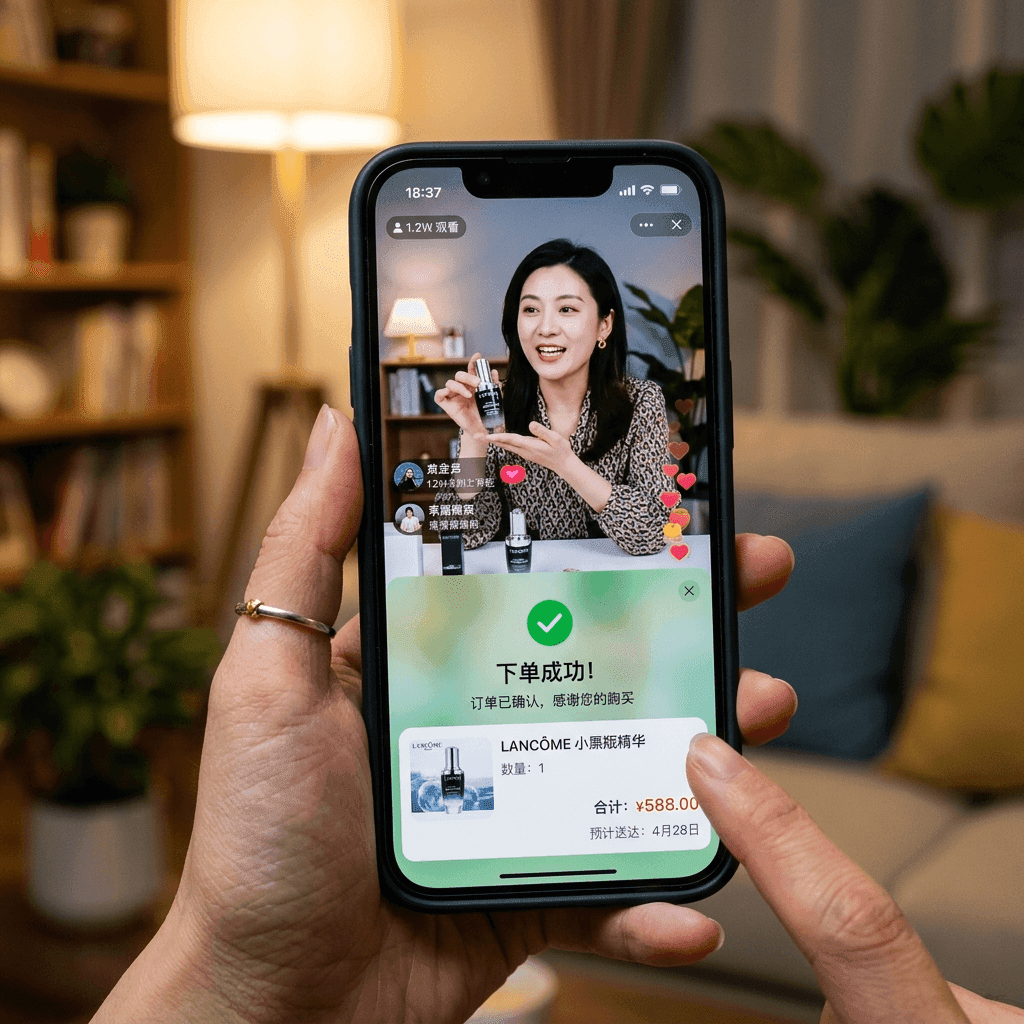
The highest-converting sales channel in China’s digital ecosystem is not a website, an app store, or a social media feed. It is a livestream.
How big is live commerce in China?
China’s live commerce market hit 4.9 trillion yuan in total transaction value in 2023, growing at over 35% year over year.
By 2025, the broader online retail market was projected to reach 16.65 trillion yuan, with live streaming as its fastest-growing segment.
Source: iiMedia Research, 2025 China Livestream E-commerce Industry Report
During the 2025 Double 11 shopping festival, knowledge-based livestreams grew 180% compared to the year before. Average viewer dwell time reached 28 minutes. Conversion rates on those streams hit 9.2%.
Source: 100EC.cn, 2025 Double 11 Data Report
Traditional e-commerce browsing converts at roughly 0.5-1.5%. So live commerce is running at about 6x that.
Why it converts
A livestream session works like a product demo, a Q&A, and a flash sale running at the same time. The host shows the product, takes viewer questions in real time, and offers pricing that is only available during the broadcast.
Viewers buy during the stream. Not later. A trusted host answering questions live, other buyers purchasing in real time, and a price that expires when the broadcast ends. That mix creates urgency you cannot get from a product page.
Overall live commerce conversion rates sit between 3% and 8%. Top hosts regularly hit 10-15%. Short video reviews convert at 1.5-3%. Social media posts sit at 0.5-1.5%.
During the 2025 Double 11, beauty brands saw particularly strong results. “Ingredient-focused” livestreams with hosts who had medical or chemistry backgrounds drove a 55% increase in efficacy skincare sales.
Source: 100EC.cn, 2025 Double 11 Data Report
That gap between channels is large enough that it explains why live commerce now dominates how products actually sell through influencers in China.
The three-part ecosystem
Live commerce runs on three players: marketplaces, influencers, and MCNs.
Marketplaces like Taobao, JD.com, Douyin E-commerce, and Kuaishou provide the infrastructure. They process transactions, handle logistics, and run creator platforms that onboard, rank, and certify influencers.
Influencers create the content and host the streams. They range from mega KOLs with tens of millions of followers down to micro creators with 10,000 to 100,000.
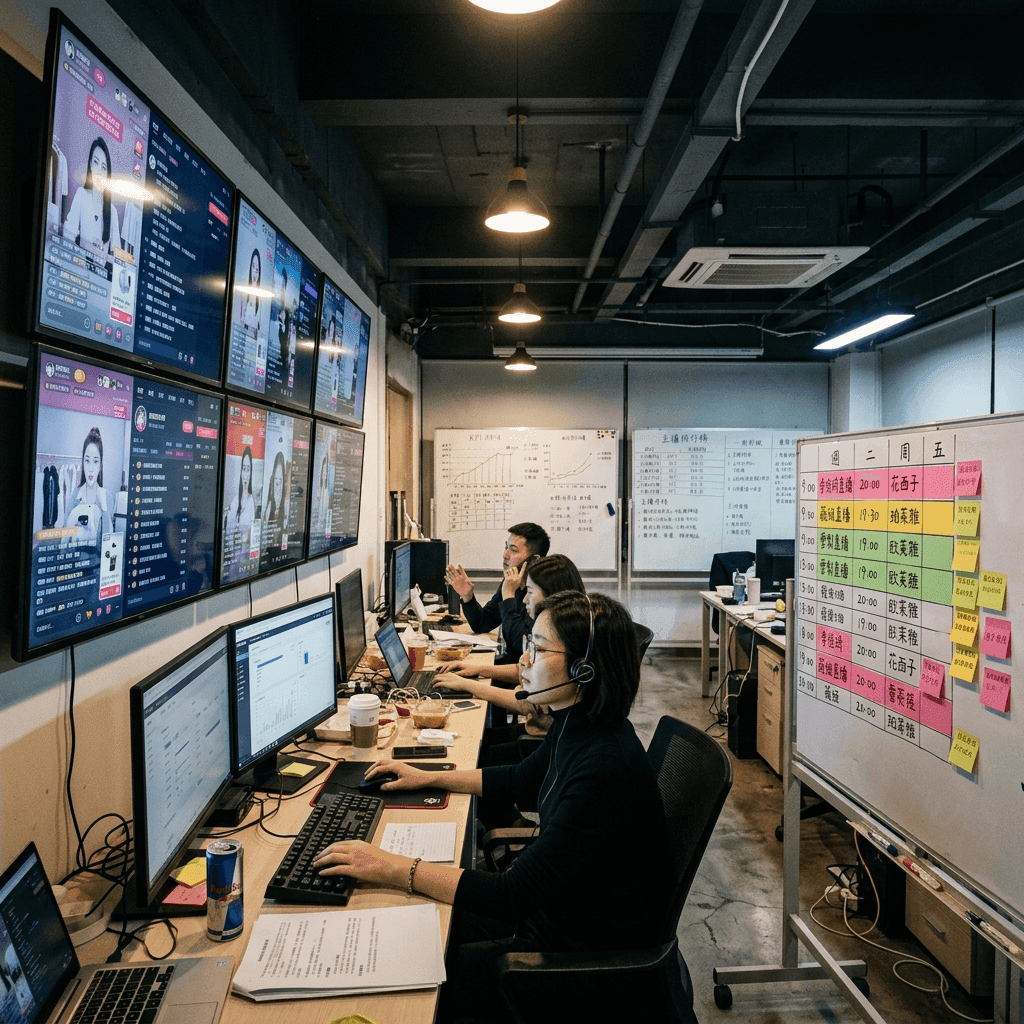
MCNs (Multi-Channel Networks) sit in the middle. They recruit influencers, negotiate brand deals, handle compliance, and coordinate campaigns. MCNs manage an estimated 70-80% of mid-to-top tier influencers. The MCN market reached 63.6 billion yuan in 2024.
Source: iiMedia Research
Micro-influencers often operate independently. But for brands running paid live commerce campaigns at any real scale, MCN partnerships are the standard path.
Commission models
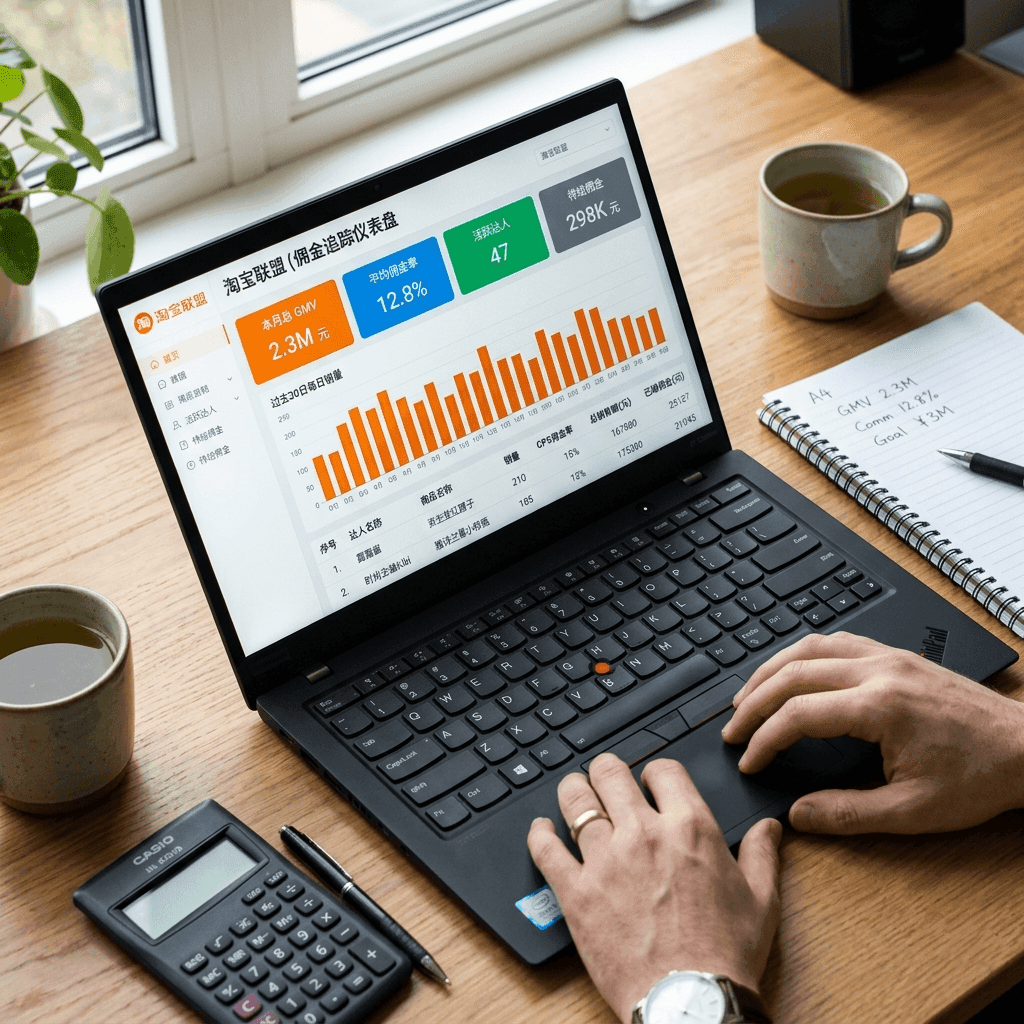
Three payment structures drive the economics. The most common is CPS (Cost Per Sale), used in 80-90% of campaigns. The influencer earns a percentage of each sale after discounts and refunds. Low-risk for brands because you only pay when someone buys.
CPA (Cost Per Action) pays a flat amount for specific actions like app downloads or signups. It shows up more in awareness campaigns on social channels rather than live commerce.
Top KOLs and high-profile livestream hosts typically work on a hybrid model: a flat booking fee to secure their time, plus CPS commission on top. This is how the biggest names operate.
Rates vary by product category:
| Category | Commission range |
|---|---|
| Beauty and skincare | 10-25% |
| Fashion and apparel | 8-15% |
| FMCG and food | 5-12% |
| Electronics and tech | 3-8% |
| Luxury goods | 5-15% (plus fixed fees) |
Platforms like Taobao Union and Douyin Select Alliance automate the tracking and payouts. They take roughly a 10% service fee on commissions.
AI behind the scenes
AI is not replacing livestream hosts. But it is reshaping what happens before and during broadcasts.
According to a report from Chinabaogao, one beauty host used an AI-generated content library and cut her per-product explanation from 5 minutes to 2.5 minutes. Her GMV conversion rate went up 40%.
Script preparation is where the time really goes. A single livestream covering 80 products requires roughly 24 hours of writing. AI tools now generate product talking points, compliance checks, and creative variations in a fraction of that time. By most accounts, the majority of active livestream rooms in China now use AI for at least part of their content prep.
AI digital hosts are part of the picture too. JD.com’s virtual host ran a 24-hour health products stream that reached a 22.6% conversion rate. These digital hosts work best for overnight shifts and standardized product demos. Prime-time slots still belong to humans.
On Kuaishou alone, AI-generated creative assets now exceed 30 million daily in consumption.
Source: CIECC, Livestream E-commerce High-Quality Development Report
Same pattern across the whole industry: AI handles volume and speed. Humans handle trust.
Common mistakes
Most international brands treat live commerce like a one-off experiment. One session, one host, see what happens.
That almost never works. Live commerce is a system, not an event. It requires consistent scheduling, the right host matched to your product category, proper product selection, and paid ad support to actually get viewers into the room.
The investment level has gone up too. During Double 11 2025, brands spent an average of 250,000 yuan per major livestream, up from 150,000 yuan the previous year. Professional lighting, audio, and set design are now standard.
Source: 100EC.cn
There is also the self-broadcasting trend. Brand-owned livestreams accounted for 40% of total live commerce GMV during Double 11 2025, up 8 points from the year before. Companies like Anta, L’Oreal, and Xiaomi now run in-house teams of 50+ people doing daily broadcasts. Some of these brands generate more revenue from their own streams than from working with external KOLs.
Treat this as a side project and you will get side-project results.
The bottom line
Live commerce is the highest-converting channel in China. It is also the most complex. The influencer, the MCN, the marketplace, the commission structure, the content production, the ad spend to fill the room. All of it needs to work.
For brands serious about revenue in China, this is not optional anymore. It is where the money is.
Need help setting up WeCom for your brand in China?
Book a call