Content
AI content production in China: what brands need to know right now
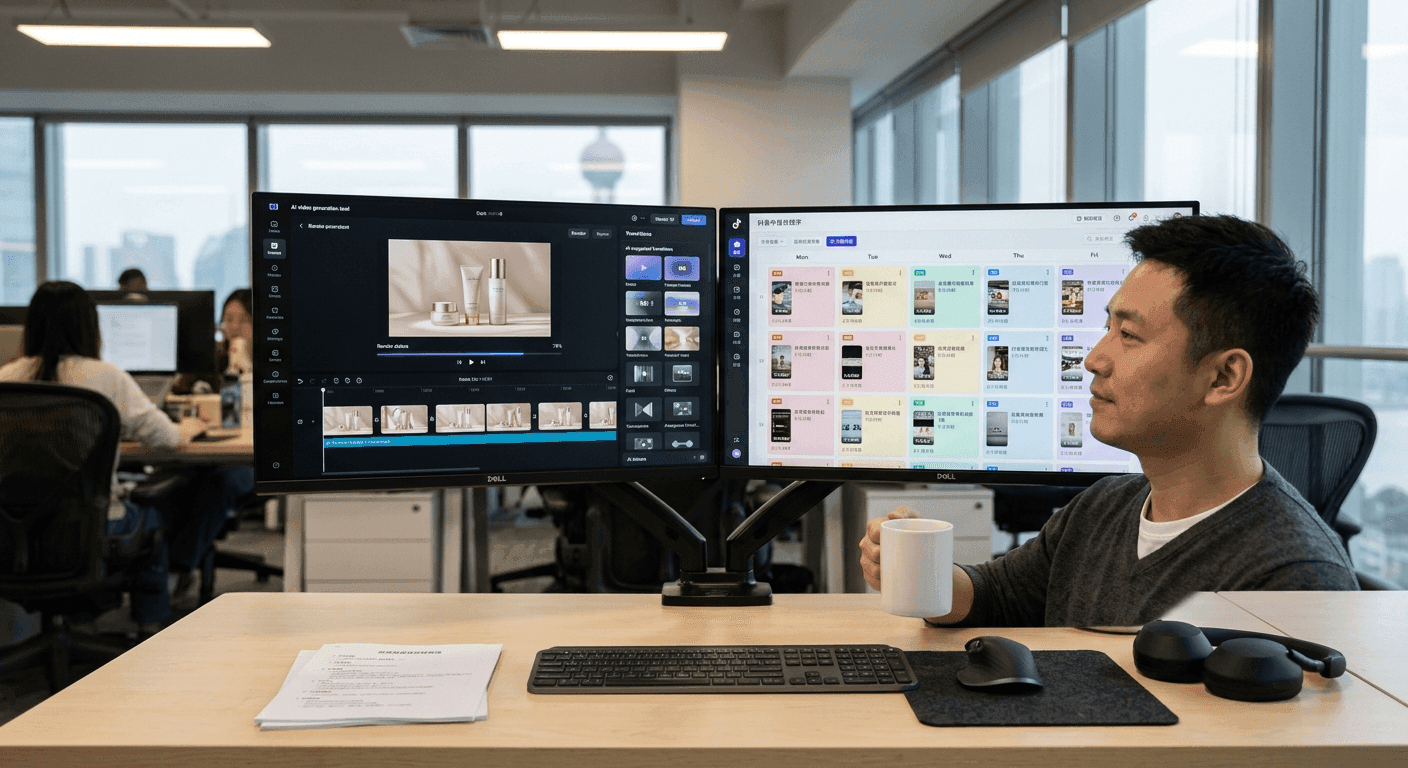
Over half of Chinese advertisers already use AI to create content. The market is growing at 60% a year. Here is what that means for your brand.
The numbers behind the shift
China’s AI-Generated Content (AIGC) market reached 25.7 billion yuan in 2025, according to a joint report by Weiboyi and the China Advertising Association. By 2028, industry forecasts put that number at 276.7 billion yuan. That is a pace of growth most industries would not come close to matching.
Industry data cited in Douban’s 2026 AI marketing review shows that 53.1% of Chinese advertisers now use AIGC in creative production. Nearly 20% rely on AI for more than half of their video workflow. AI-driven marketing campaigns doubled year-over-year in 2025 and now represent 19.2% of all marketing activity tracked in China. This is not a test phase anymore.
What AI does for content teams
So where are the gains showing up?
Speed. AI tools can generate 240 pieces of multi-format content in seconds.
A one-minute short video that used to cost tens of thousands of yuan in production fees can now be made for as little as 500 yuan.
Source: Beijing News, citing Weiboyi report
That kind of cost reduction changes what is economically possible for brands of any size.
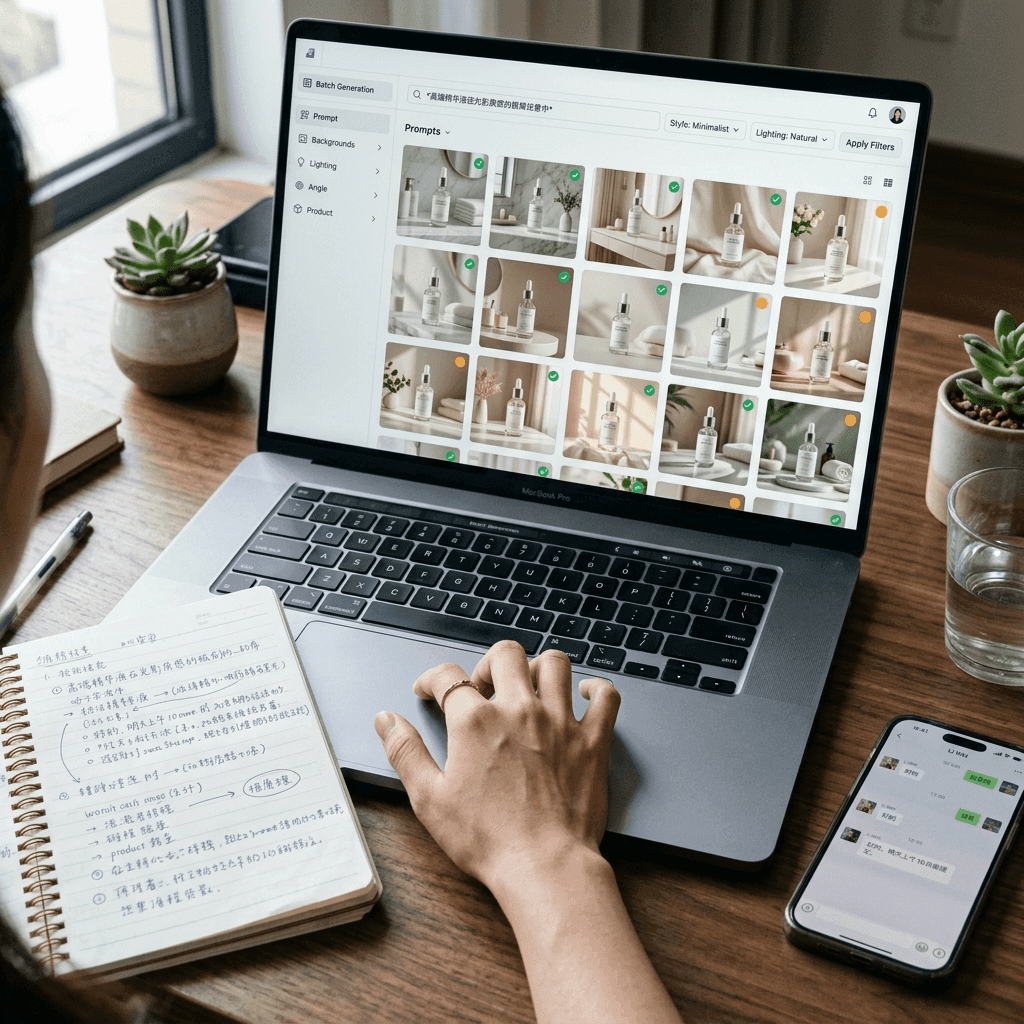
Volume. Platforms like Douyin, RedNote, and WeChat Channels all reward posting frequency. The algorithms favor accounts that stay active. AI gives brands a way to keep that posting pace without exhausting their content teams. One consumer goods company built an entire AI-generated product video library, then recombined clips to produce hundreds of variations for different campaigns and audiences.
Source: iFenxi, 2025 AIGC Application Practice Report
Insights. AI does not just create content. It reads consumer behavior in real time. Tools from companies like Volcengine analyze social media comments, trending topics, and sentiment data as they happen. A consumer insights report that took weeks of manual work now takes hours. Sometimes less.
Source: iFenxi, 2025 AIGC Application Practice Report
Brands already doing this well
The best results come from brands that treat AI as a creative tool, not a replacement. Here are three that got it right.
| Brand | What they did | Result |
|---|---|---|
| Tomson and Hancock | Produced a full brand film entirely with AI | Went viral on Douyin and WeChat. Users said this was exactly what AI content should look like. |
| Lenovo | Animated terracotta warriors speaking Shaanxi dialect for a back-to-school campaign | High engagement, widely shared across social platforms. |
| Palace Museum | Used AI to bring cultural relics to life for Lunar New Year special | 96% positive audience feedback. |
Source: Douban, 2026 AI Marketing Case Study Report
On Douyin, international brands like Friso are working with Volcengine’s AI creative tools to generate branded filter effects. Users play with the filter, post it to their feeds, and that traffic ends up routing into the brand’s livestream and product pages. It is a simple loop but it works surprisingly well.
Source: iFenxi, 2025 AIGC Application Practice Report, citing Volcengine case
What this means for international brands
Content production has always been the slowest part of running social media in China. Getting assets localized, shot, reviewed, and published across four or five platforms eats through time and budget. AI shrinks both of those considerably.
Product visuals that required a full photo shoot in Shanghai can now be generated with custom AI models trained on your brand’s look. It is faster by a factor of ten, at minimum. Copy that took a native Chinese writer an entire day gets drafted in minutes and refined by a human editor. Weekly campaign reports that used to need days of data work happen overnight now.
And then there is the downstream effect.
When your team spends less time on production, they spend more time on strategy, creative direction, and understanding what actually resonates with Chinese audiences. That is the real payoff.
AI takes the repetitive work off their plate. The creative decisions stay with people who understand the market.
As iResearch noted in their 2025 report on AI and internet media, content production in China is shifting from a specialist activity to something far more accessible. What used to require a full creative team can now start with a brief and an AI tool. The professional layer still matters, but the barrier to producing quality content at speed has dropped dramatically.
Source: iResearch, 2025 China AI and Internet Media Industry Research Report
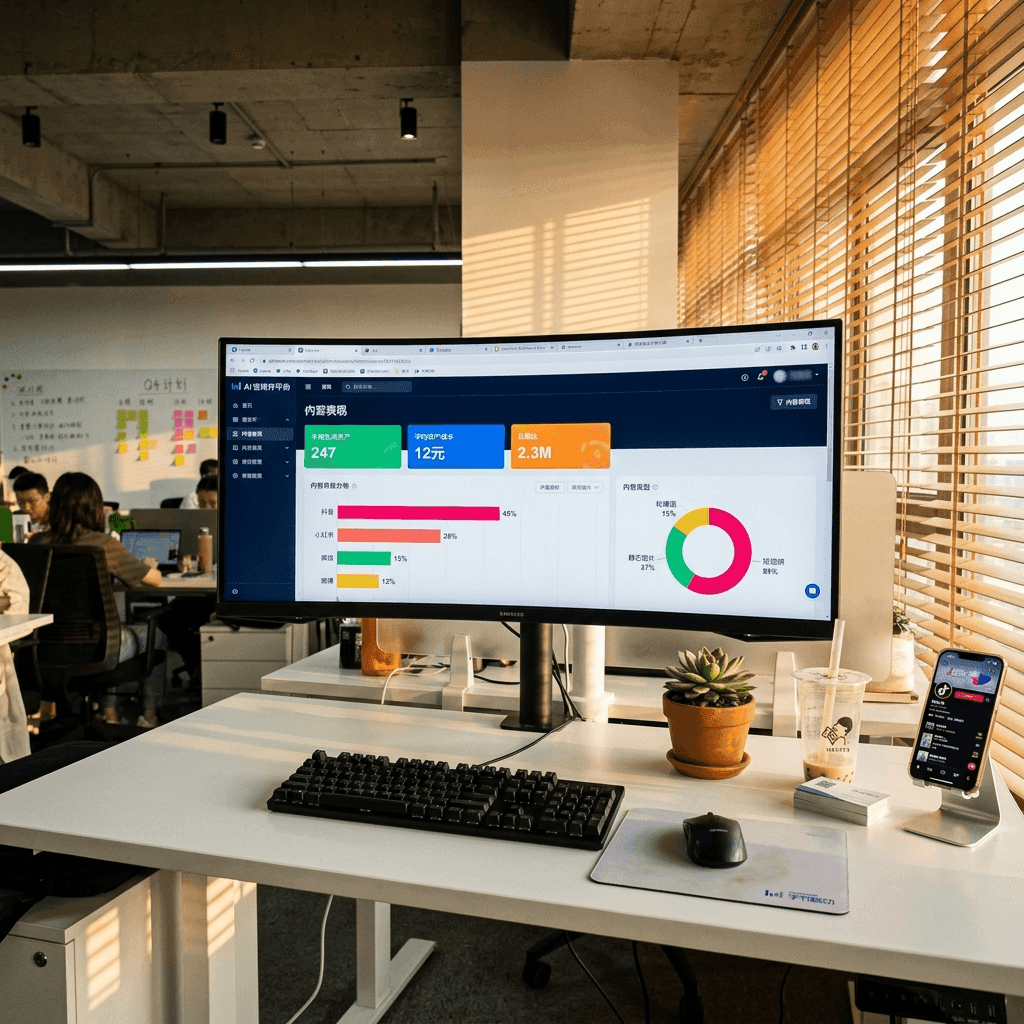
Where this is going
Every major Chinese platform is investing in AI content tools now. Douyin, WeChat, Baidu, Alibaba. They all have dedicated AI creative products. The infrastructure is already there, and adoption is climbing fast.
For international brands in China, AI content production is no longer something to experiment with. It is just how the market operates now.
Need help setting up WeCom for your brand in China?
Book a call